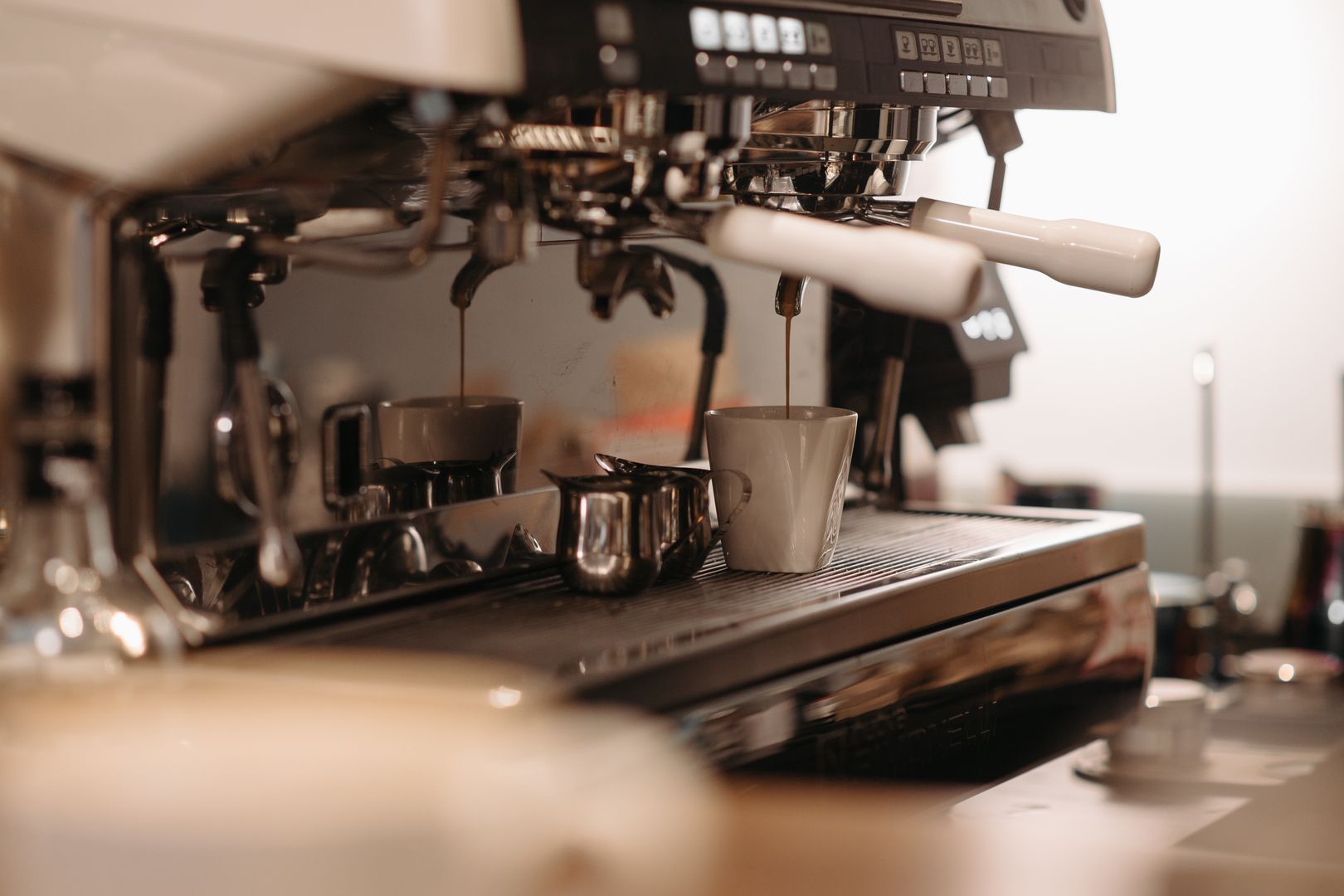
The Breville Barista Express Impress earns the top spot because it reduces rookie errors without turning espresso into a video game. It pairs low-pressure pre-infusion with a 9-bar extraction driven by a 15-bar Italian pump and uses PID temperature control; Breville even spells out 200°F as its target brew water temperature.
More importantly, the Impress puck workflow is repeatable: the built-in conical burr grinder offers 25 grind settings, and the assisted tamping applies a constant 22 lbs of pressure, finishing with a 7° barista twist. That consistency is exactly why it's the best espresso coffee machine for home for a mixed-skill household—one person can nerd out, the other can just make coffee.
The Breville Bambino Plus is the smallest machine in this list that still behaves like a real espresso setup. Its ThermoJet heating system reaches extraction temperature in about 3 seconds, which is not a gimmick if you make one or two drinks and don't want a 20-minute warm-up ritual.
It also runs a pre-infusion then 9-bar extraction sequence via a 15-bar pump, and it uses a 54mm portafilter like other mid-range Breville machines. The trade-off: it's less forgiving of sloppy prep because there's no built-in grinder and less mass and thermal stability than heavier boiler machines.
If you want the most classic espresso experience under $600, the Gaggia Classic Pro E24 is the one to beat. In mid-2026, it's sold in the U.S. at $549, and the E24 update matters: it uses a solid, lead-free brass boiler and is built around a 58mm commercial-style portafilter.
It's also designed around true 9-bar brew pressure, and it uses a vibratory pump rated up to 15 bars—the important number is the brew pressure, not the pump's maximum. On the one hand, the E24 is sturdy and repairable; on the other, you're signing up for a more hands-on rhythm and some waiting when you switch between brewing and steaming.